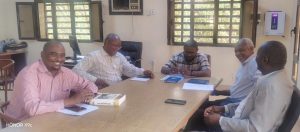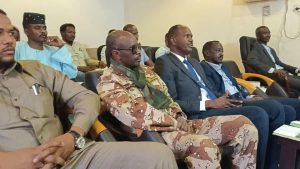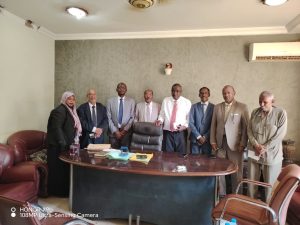
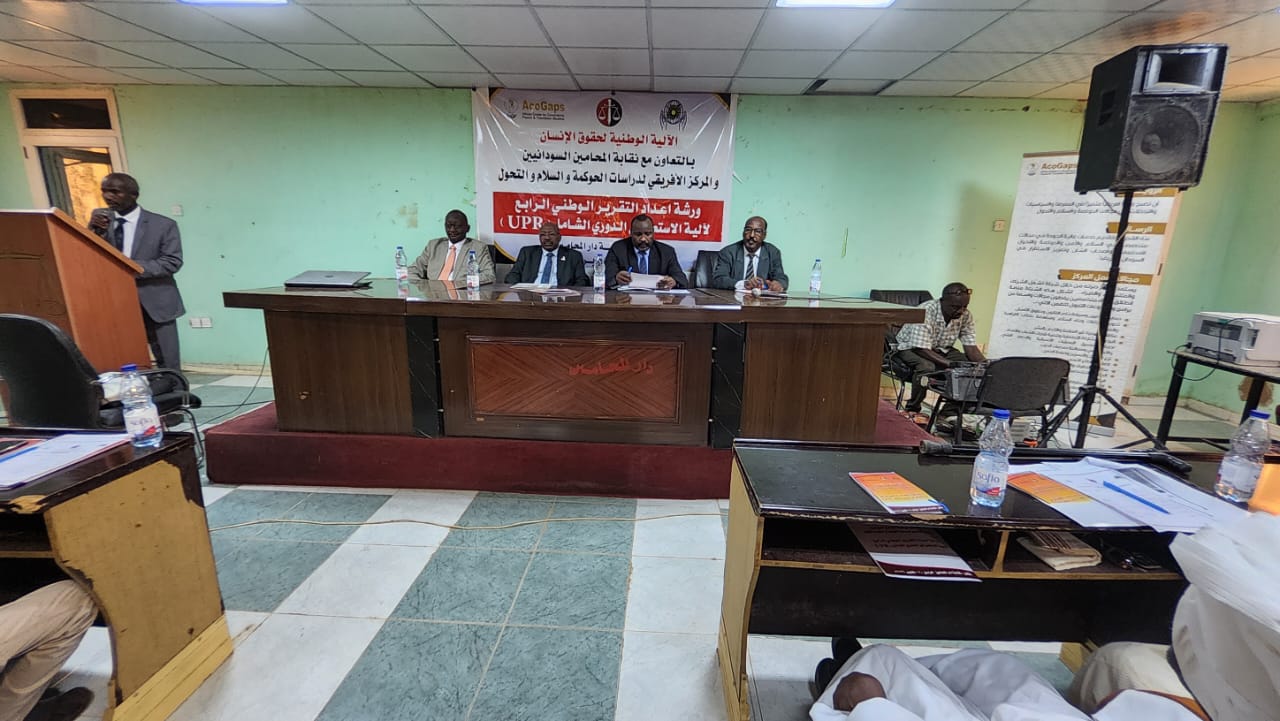
The National Human Rights Mechanism, in cooperation with the Sudanese Bar Association and the African Center for Governance, Peace and Transition Studies, held a workshop yesterday at the Bar Association headquarters in Khartoum to prepare the Fourth National Report for the Universal Periodic Review (UPR) mechanism, with the participation of legal experts, community leaders, native administration representatives, and journalists.
The opening session was addressed by Mr. Babiker Hassan Hamdin, Minister of Health and Social Welfare in the Darfur Regional Government; Maulana Ali Khadr Ali, Undersecretary of the Ministry of Justice; Mr. Zain El-Abedin Mohamed Hamad, President of the Bar Association; and Dr. Mahmoud Zain El-Abedin, Director of the African Center for Governance, Peace and Transition Studies.
During the single-day workshop interventions, several attendees pointed out that 20,000 detainees are currently held in the prisons of the Rapid Support Forces (RSF), stressing the urgent need for serious efforts to secure their release. Meanwhile, Dr. Yasser Sayed Ahmed Al-Hassan, Head of the Legal Sector for Human Rights and International Humanitarian Law at the Ministry of Justice, noted that an effective mechanism run by the International Committee of the Red Cross (ICRC) is currently working to free prisoners held by the RSF.
Participants called for the imperative documentation and presentation of all crimes, including the killing of 125 underage children in Central Darfur State by the RSF, alongside other unrecorded crimes in South and East Darfur, to be incorporated into the National Human Rights Mechanism’s report. They also highlighted the extensive 58-day brutal attack on the city of El Geneina, where the most horrific crimes took place, as well as the existence of mass graves in the city.
The workshop concluded with several recommendations, including strengthening civil society organizations, supporting popular diplomacy, and sparing future generations the scourge of wars—particularly internal conflicts, which inflict the greatest damage on human rights. Recommendations also emphasized full commitment to supporting and promoting human rights, with participants demanding consultative status within the UN system itself—rather than participating merely in side events—so they can represent Sudan’s position directly from within international organizations.