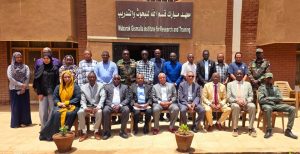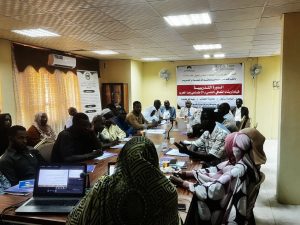

Khartoum – Mr. Al-Nour Al-Sheikh Al-Nour, Head of the Supreme Council for Social Peace, met with a delegation from the African Center for Governance Studies, headed by Dr. Mahmoud Zain Al-Abidin, to discuss the social peace strategy for the present and foreseeable future. They also discussed ways to enhance joint cooperation to support community initiatives and consolidate a culture of dialogue and peaceful coexistence, thereby contributing to reducing local conflicts and promoting social stability.
The meeting reviewed the social peace strategy prepared by the Center’s experts. This strategy serves as an institutional framework for supporting social peace initiatives, developing mechanisms for community dialogue, and addressing social issues that contribute to conflict. It also aims to strengthen partnerships between relevant institutions and various societal forces to achieve peace and stability.
The African Center for Governance Studies delegation included Dr. Al-Amin Mahmoud, an expert on peace and mediation; Dr. Mohamed Issa Manawi, an environmental expert; Engineer Khairi Al-Qudail, an expert on local administration and conflict transformation; and Dr. Mohamed Adam, an expert on peacebuilding and social issues. Dr. Mohamed Adam Ahmed, an expert in conflict management and prevention, and Dr. Mohamed Hamed Al-Faki, a media expert and Director of Studies and Research at the Center, were present.
For his part, Mr Al-Nour Al-Sheikh Al-Nour, Head of the Supreme Council for Social Peace, affirmed the Council’s support for strategic initiatives and studies that contribute to achieving its goals and enhance its efforts in spreading a culture of peace and consolidating the values of tolerance, fraternity, and acceptance of others. He emphasized the importance of utilizing scientific and practical expertise in developing social peace programs and responding to the challenges facing society at the present time.
During the meeting, the Center’s experts stressed the importance of addressing the root causes of societal issues that lead to conflicts, rather than merely dealing with their aftermath. They pointed to the necessity of raising societal awareness of the dangers of local conflicts and their repercussions on the social fabric, and the potential for them to escalate into conflicts that threaten cohesion and stability.
The speakers emphasized the importance of adopting preventative approaches based on dialogue and community awareness, and strengthening the role of local and community leaders in containing and resolving disputes peacefully. This supports community reconciliation efforts and limits the expansion of conflicts. The meeting comes within the framework of efforts aimed at strengthening institutional work in the field of social peace, and expanding areas of coordination and cooperation between the Supreme Council for Social Peace and research centers and experts. This contributes to developing practical visions and strategies to address social challenges, mend the national fabric, and build a more cohesive society capable of overcoming the effects of conflicts and achieving recovery and stability.